The Attackman
In 1932, Jack Turnbull, the greatest attackman of his era, stood at the very summit of the lacrosse world. Twelve years later he was gone, over occupied Europe.

THE FALLEN AND THE FINAL FOUR · A MEMORIAL DAY SERIES
PART 6 OF 8
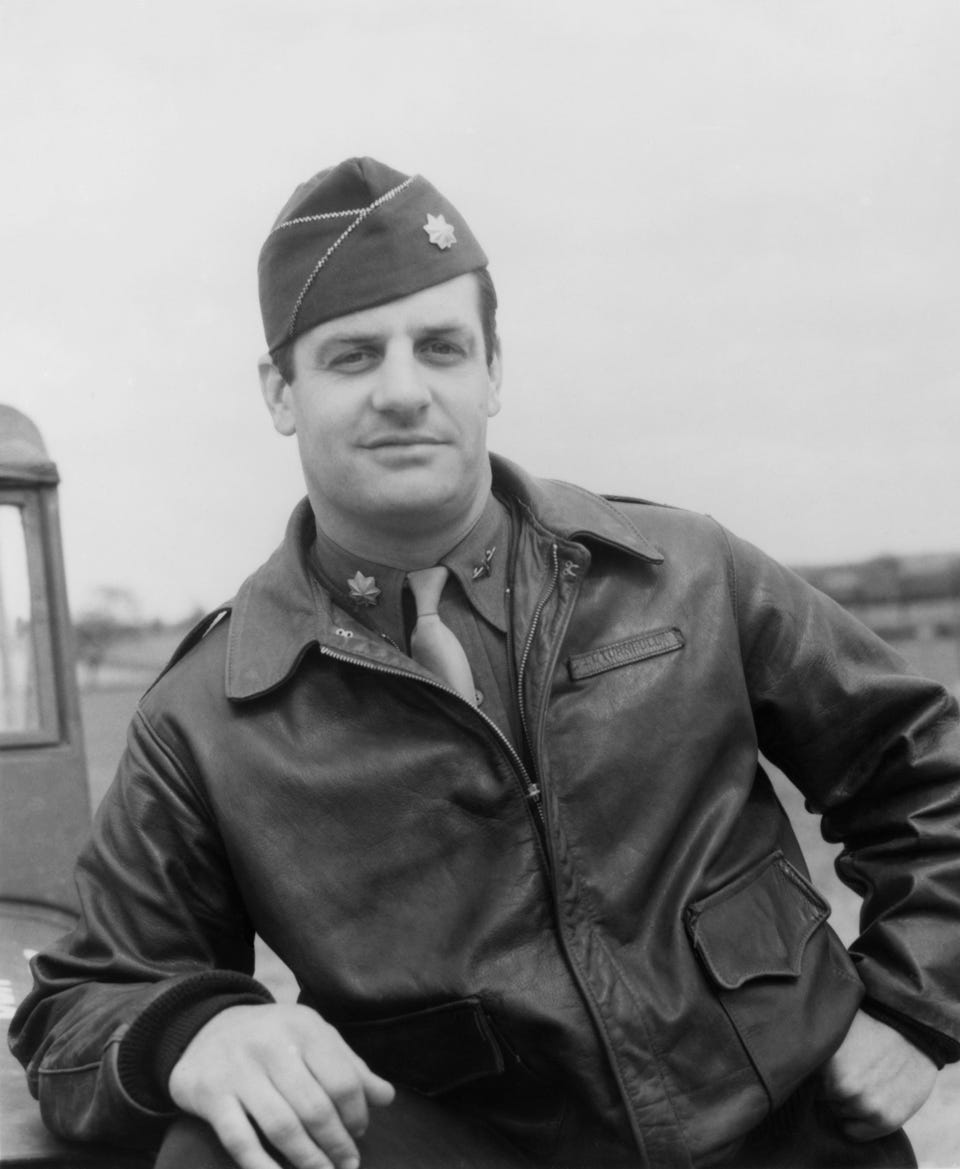
John Inglehart "Jack" Turnbull was a noted athlete and member of the Maryland National Guard. He was killed in action during a bombing mission over Europe. Image is in the Public Domain.
The Cathedral of American Lacrosse
To grasp how completely Jack Turnbull once owned the game of lacrosse, you have to picture Baltimore in the years between the world wars. The city was the undisputed capital of the American sport, and Johns Hopkins University was its cathedral — a program that did not so much win national championships as collect them. And at Hopkins, the finest player on the finest team was John Iglehart Turnbull, known to absolutely everyone as Jack.
He was born in 1910 into a Baltimore lacrosse family — in that city, in those years, the game was nearly a family trade. His older brother, Doug, was a star in his own right, and both Turnbull brothers would one day be enshrined in the National Lacrosse Hall of Fame. Jack learned the sport the way Baltimore boys of his generation did — on the city’s fields, through its long, lacrosse-besotted springs — and he grew into the kind of attackman who could reorganize an entire defense simply by standing where he chose to stand.
He was named a first-team All-American three times. He earned an engineering degree from Hopkins in just three years. And in 1932, when the Olympic Games came to Los Angeles and lacrosse was contested as a demonstration sport, Jack Turnbull was named captain of the United States team. For lacrosse players of his generation, there was no higher international honor available. He was, by broad agreement, the best attackman of his age — and many argued the finest player the American game had yet produced.
He belonged to the last great generation of amateur athletes before the modern professional era — men expected to move easily from universities and playing fields into the obligations of war and public life. In another era, Turnbull might have become simply a celebrated engineer, businessman, or coach whose name survived in old record books and banquet speeches. Instead, history placed his generation inside the machinery of the Second World War.
If you value stories that connect sports, history, memory, and sacrifice, please consider subscribing to Short Shot Media. It’s free, and it helps us continue telling stories like these.
Into the Skies Over Europe
Turnbull did not wait for the war to come and find him.
In June 1940 — with Europe already burning and the United States not yet in the fight — he enlisted in the Maryland National Guard as an aviation cadet and was commissioned a second lieutenant. He was mobilized in February 1941, months before Pearl Harbor. He had understood where the world was heading before most of his countrymen were prepared to admit it.
He became a bomber pilot, and a gifted one, and he rose quickly through what became the United States Army Air Forces. By 1944 he was a lieutenant colonel — the operations officer of the 492nd Bombardment Group, based in the flat farm country of East Anglia, England, responsible for planning the heavy-bomber missions that flew, day after costly day, into the skies over Germany.
The 492nd would become one of the hardest-hit heavy bomber groups in the entire Eighth Air Force. Flying deep into occupied Europe against relentless anti-aircraft fire and German fighters — including the emerging German jet aircraft that shocked Allied crews late in the war — the group suffered devastating losses in the summer and fall of 1944. The casualty rates among heavy bomber crews during that phase of the air war were staggering. Men disappeared into the clouds over Europe with a regularity that is difficult to comprehend from the safety of modern distance.
On October 18, 1944, Turnbull was aboard a B-24 Liberator on a bombing run to Leverkusen, Germany. The aircraft carried a name painted on its nose, as they all did: Flying Ginny. On the return leg, at 24,000 feet, it encountered a violent storm and crashed in Belgium.
Lieutenant Colonel Jack Turnbull died on October 20, 1944, from injuries sustained in the crash. He was 34 years old.
His decorations included the Distinguished Flying Cross, the Air Medal, and the Purple Heart.
The Name Spoken Every Memorial Day
It is a particular species of loss — the man who was, within living memory, the best in the world at a beautiful and entirely peaceable thing, claimed by the relentless machinery of war.
Turnbull was not an anonymous young recruit with his whole life ahead of him in the abstract. He was a known quantity: an Olympic captain, an engineer, a national champion, a name the entire sport recognized. And the war took him as readily as it took everyone else — which is the lesson the war taught over and over again, and which each generation seems condemned to relearn.
Lacrosse resolved that he would not be forgotten.
In the years after the war, the sport named its award for the nation’s outstanding collegiate attackman in his honor: the Jack Turnbull Award. It remains one of the most coveted individual prizes in the college game, and it is presented every year on championship weekend — which is to say, every year on Memorial Day weekend.
Every spring, amid television cameras, packed stadiums, and championship celebrations, the sport quietly speaks his name again.
The best attackman in America accepts a trophy named for an attackman who once flew bombers into the worst violence of the twentieth century until a storm over Belgium brought him down.
If these stories mean something to you, please subscribe to Short Shot Media on Substack and share this series with another.
In 2022, Johns Hopkins dedicated a Veterans Memorial Wall at its lacrosse center honoring eleven former Hopkins players killed in the nation’s wars across the First World War, the Second, and Vietnam. Jack Turnbull’s name is among them — perhaps the most famous of the eleven, but still only one of eleven.
The cathedral of American lacrosse, it turns out, is also a war memorial.
Most of the young men who hurry past that wall on their way to practice have a game on their minds. The wall will wait and it will be there for the day they are ready to remember those that came before them.
This is Part Six of Eight in “The Fallen and the Final Four,” Short Shot Media’s Memorial Day series honoring athletes and servicemen the country lost far too young — including Michael Murphy, Brendan Looney, Pat Tillman, Jimmy Regan, and others whose stories continue throughout Memorial Day weekend.